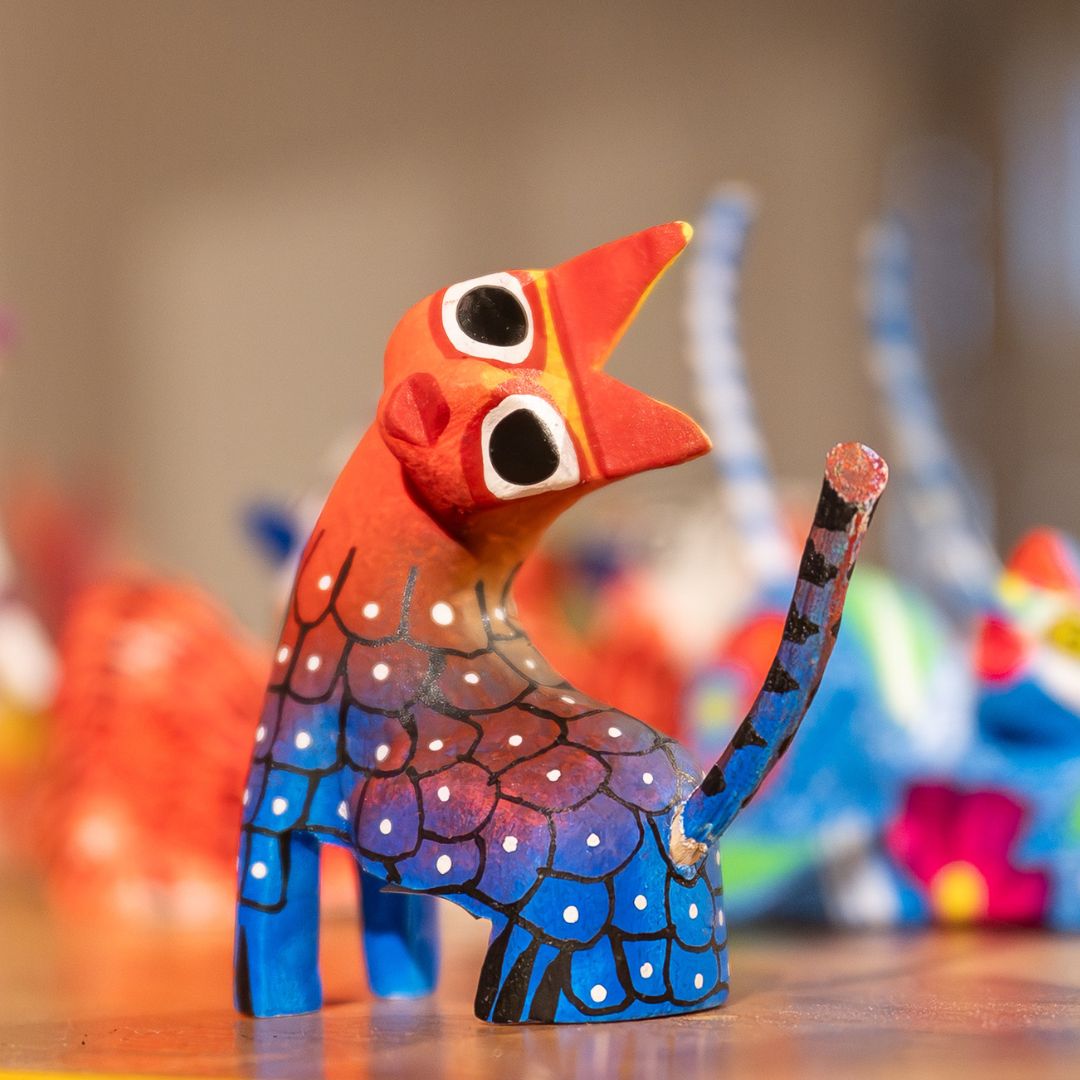
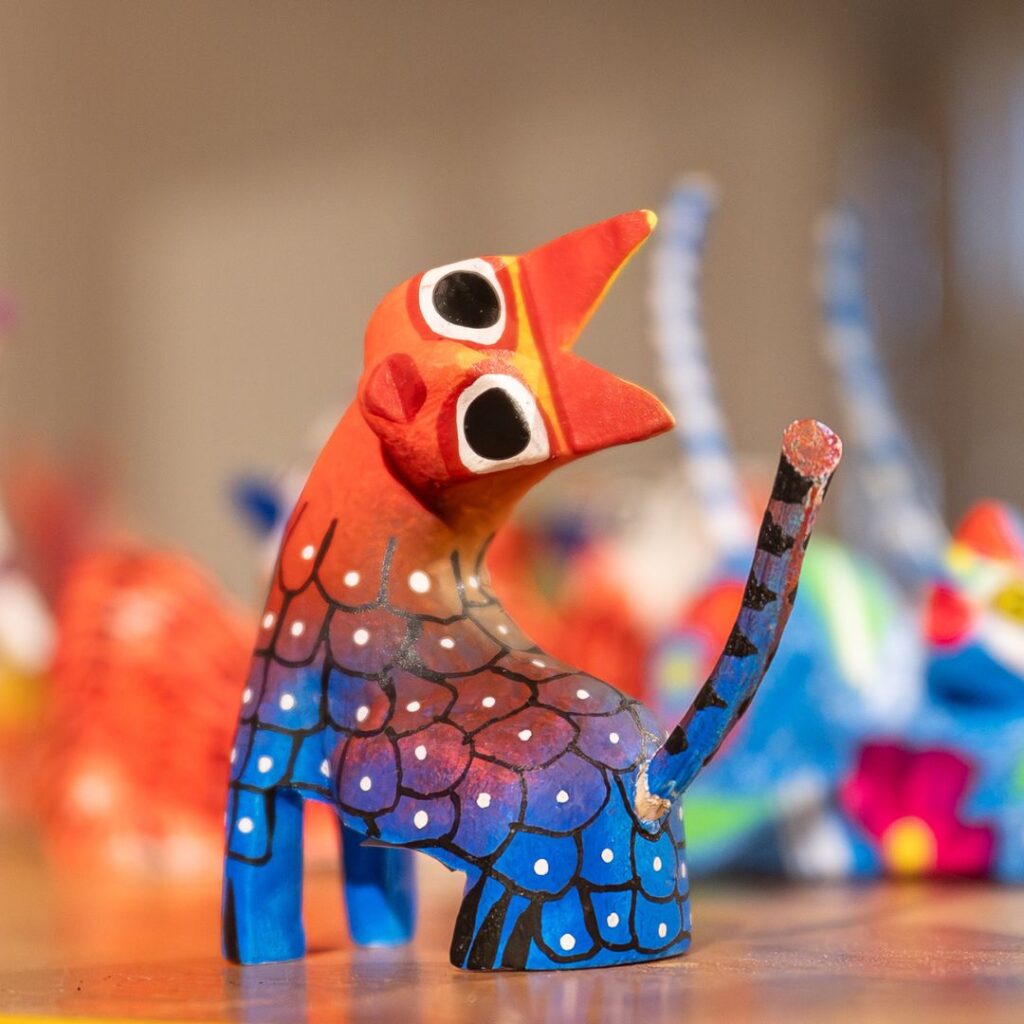
Many say Mexico is color. And it’s true — color spills out of everything here, from the architecture to the food on your plate. But there’s something else that runs even deeper: creativity is almost a second language in this country, a way of saying what Mexico means when words fall short.
Every region hides its own treasures in its craftsmanship. A single idea, planted in someone’s imagination, can grow into a tradition, a story passed down, even a festival. That’s the real richness of Mexico: wherever you travel, you find cosmology, heritage, and beliefs that have stayed alive for generations. And few objects capture that magic as vividly as the alebrije.
Maybe you’ve already seen one and couldn’t quite look away. There’s something about these creatures — colorful, playful, impossible — that makes you want to take one home. So where do they come from?
Born from a fever dream in Mexico City
The story of the alebrije begins not in a workshop, but in a dream. In the 1930s, a Mexico City artisan named Pedro Linares López fell gravely ill. Linares was a cartonero — a master of papier-mâché — who built piñatas, Judas figures, and commissioned pieces for artists including Diego Rivera and Frida Kahlo. As he lay unconscious with fever, he dreamed of a strange forest where rocks and clouds turned into creatures that shouldn’t exist: a donkey with wings, a rooster with bull’s horns, a lion with a dog’s head. All of them shouted a single word he had never heard before — “¡Alebrijes!”
When he recovered, Linares set out to give those creatures form. Using paper, cardboard and vivid paint, he recreated exactly what he had seen, and the word he’d dreamed became their name. His work traveled to the United States and Europe, and in 1990 Mexico awarded him the National Prize for Arts and Sciences — the highest honor a folk artist can receive in the country.
From Mexico City paper to Oaxacan copal
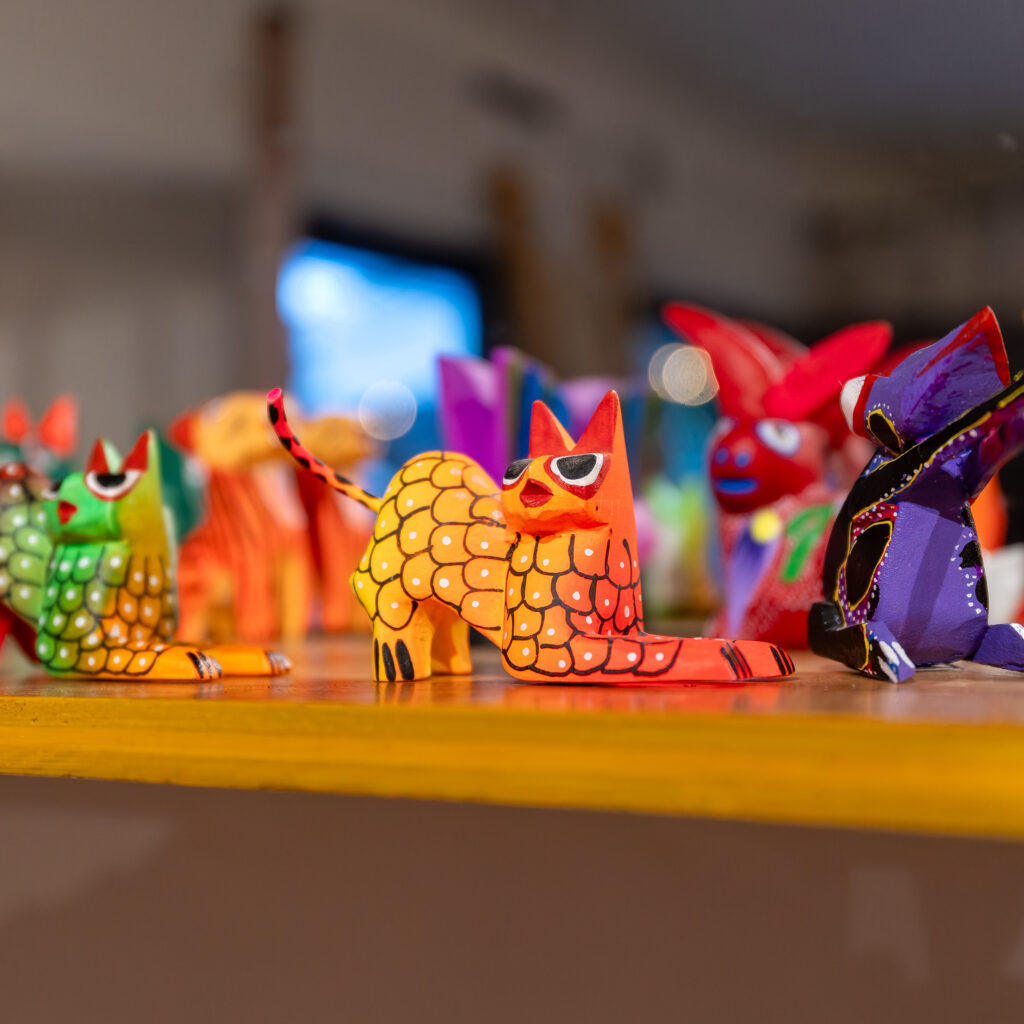
Here’s the part most people get wrong: the wooden alebrijes you see everywhere today are a later chapter of the story. In the 1980s, the concept reached Oaxaca, where woodcarvers already had a deep, pre-Hispanic tradition of carving animal spirits — tonas and nahuales — from local wood. Carver Manuel Jiménez Ramírez, from San Antonio Arrazola, married Linares’s fantasy with that Zapotec heritage and carved the creatures from copal, an aromatic wood whose resin has been burned as incense for centuries.
The craft spread to nearby towns like San Martín Tilcajete, where whole families still carve and hand-paint every piece — shaped while the wood is still green, then finished in bright, intricate patterns. No two are ever alike. Today, when most people picture an alebrije, it’s this Oaxacan, copal-wood version they see.
More than a souvenir
Whether it’s a tiny armadillo or a winged jaguar, an alebrije is never just a decorative object. Its playful shape is perfect to brighten a forgotten corner of your home, or to give to someone who deserves something no one else will have.
And when you choose an authentic, handmade one, you take home more than a figure. You carry a piece of Mexico — years of tradition, hours of patient work, and direct support for the artisans and the local economy that keep this art alive.
Where to find authentic alebrijes in Mexico City
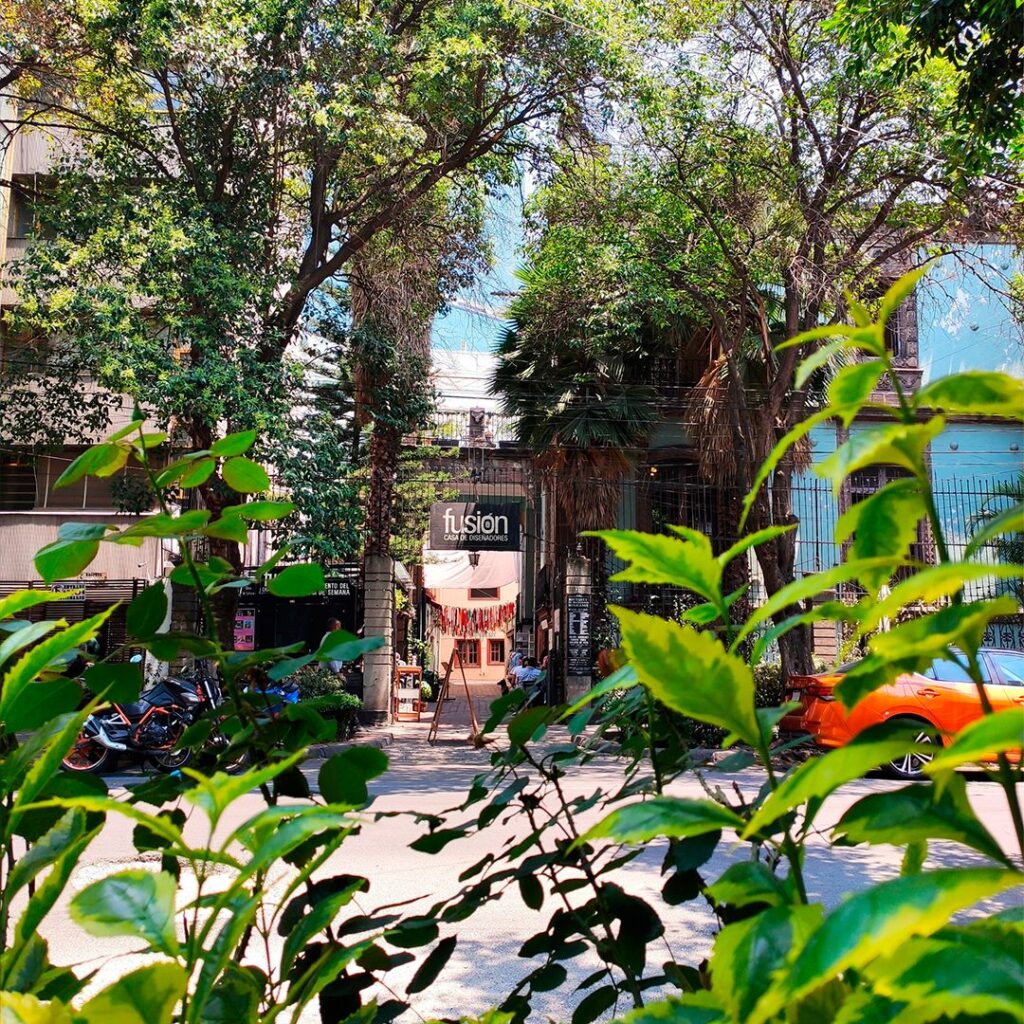
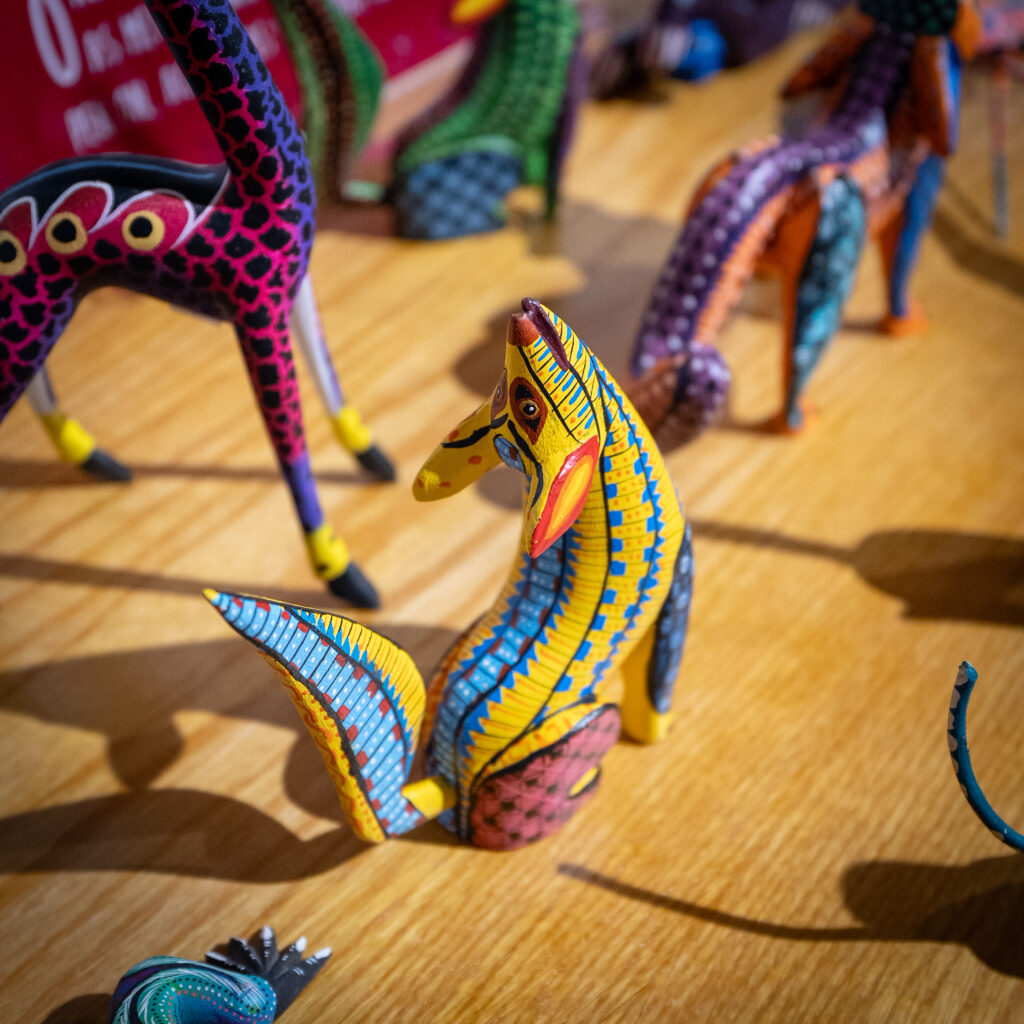
You don’t need to travel all the way to Oaxaca to bring one home. At Bazar Fusión, in the heart of Colonia Juárez, you’ll find authentic alebrijes made by Mexican artisans, in an incredible range of shapes, sizes and colors. Step inside Origen shop and it’s almost impossible to leave without one.
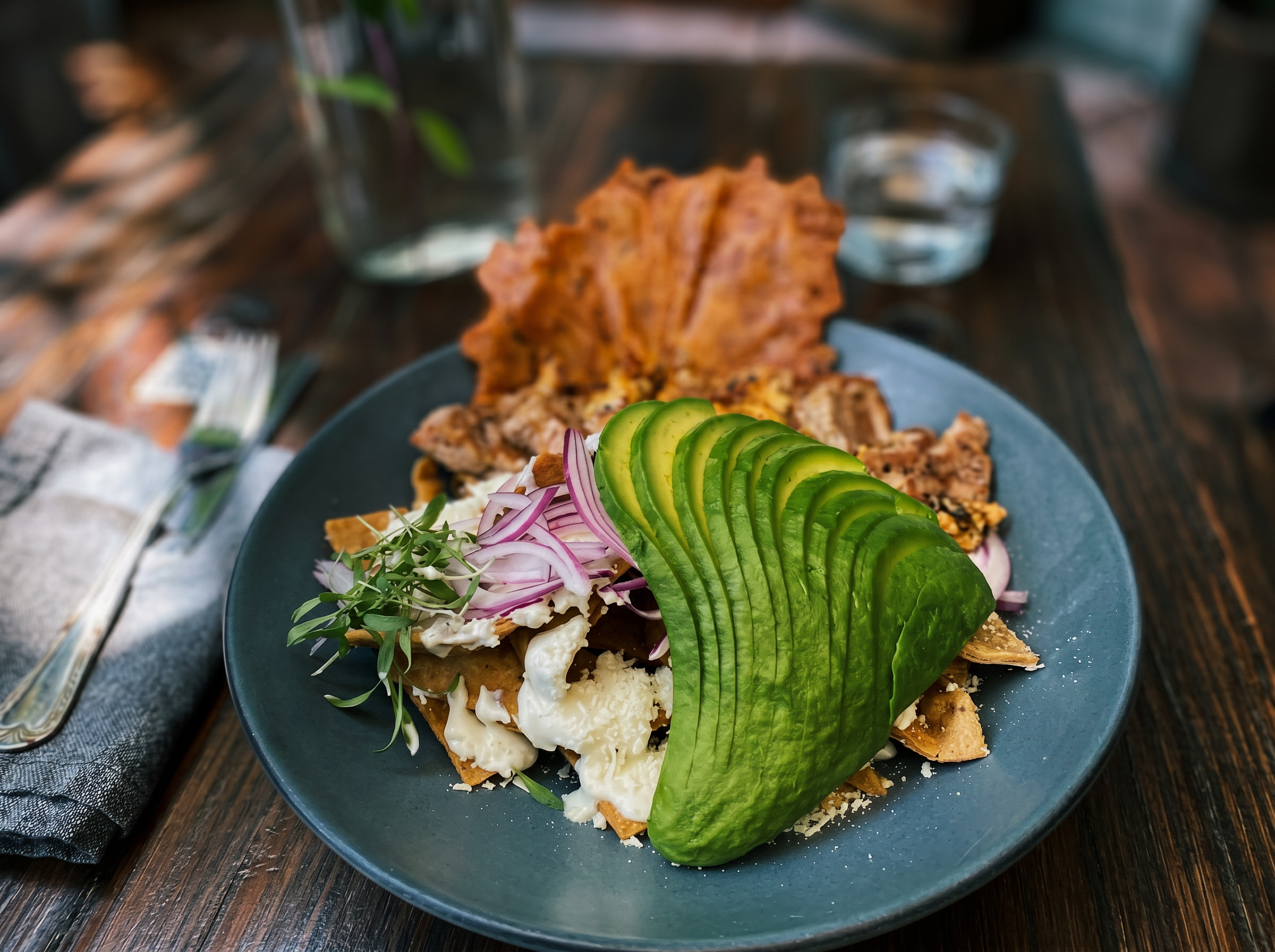
Bazar Fusión has championed local brands, artisans and entrepreneurs for more than 20 years in Mexico City. Visiting is a full experience: housed in a century-old Porfirian mansion with open-air terraces and restaurants, it brings together nearly 70 Mexican brands, from jewelry and traditional textiles to gastronomy. And its location — steps from Reforma, and next to Roma and Condesa — makes it an easy, essential stop for anyone who wants to take home real design, real craft, and more than the usual souvenir.
📍 Bazar Fusión — Londres 37, Colonia Juárez, Mexico City
🕛 Tuesday to Sunday, 11am–7pm · Pet friendly
Come see, touch and take home a piece of Mexico.